
What shoes would your brand wear?
How an actor’s creative choices might help you make better ones for your brand.
Everything I know about advertising I learnt from the movies #17.
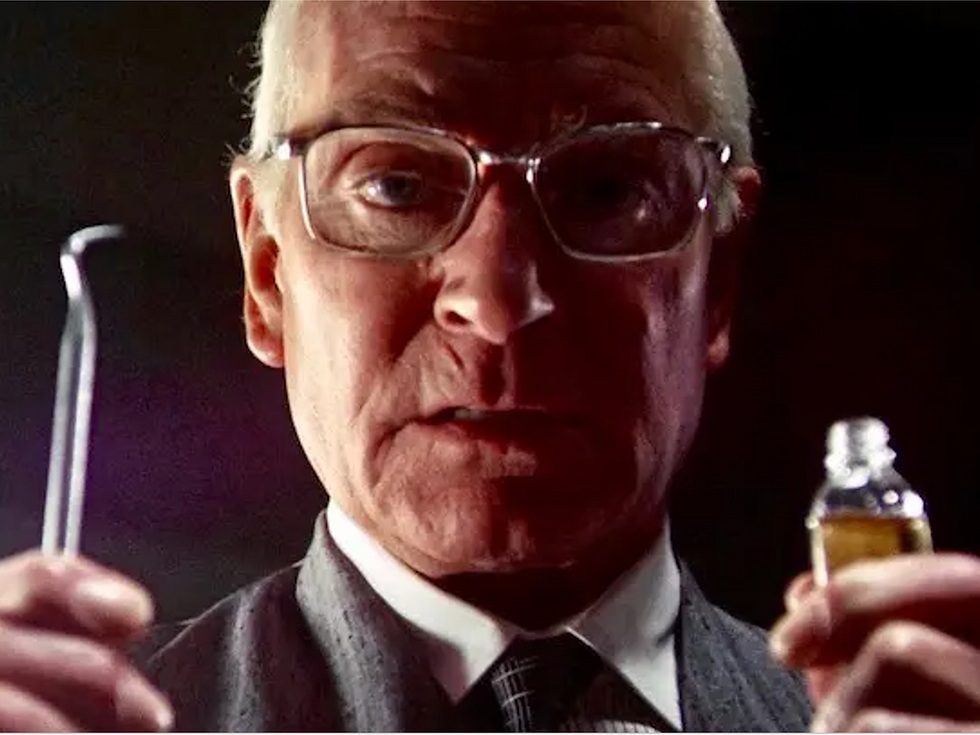
Laurence Olivier was one of the greatest stage and screen actors of the twentieth century. For playing Nazi dentist Dr. Christian Szell, in the 1977 movie Marathon Man, he received one of his 10 Oscar nominations. On top of winning Best Actor for Hamlet, way back in 1949.
How was he able to so brilliantly embody the character and portray the pure evil of Szell? Or the melancholy and bitterness of Hamlet?
Maybe it was down to his training at the Central School of Speech Training and Dramatic Art, or the mentorship of Noel Coward, early in his career.
Those surely played a part (so to speak) but one of the things that really helped him step into a character so convincingly, was to step into his shoes. Literally.
“I have to act with my feet,” Olivier said. “The minute I know what kind of shoes my character wears, I can start to play him.”
With the exception of the opening sequence of Saturday Night Fever, movies rarely focus on the characters’ shoes. But that’s not the point. When the greatest actors, writers and screenwriters create characters, they don’t just think about what kind of shoes they wear, but also where they grew up and went to school, the name of their first dog, and the name of the first boy or girl they kissed. Or frog maybe.
Anyway, when we are trying to find a way to express the character of a brand in an authentic and convincing way, we need to do the same. Get inside it, under its skin. Step into its shoes. And also the shoes of the people we are talking to.
This is one of things advertising often fails to do: and AI is making it worse, not better. It enables us to create slick polished imagery and video content, fast, that can look amazing - like patent leather shoes – but is often all surface and no depth.
Because, it tempts us to rush into creating something, before we have a real story with real meaning. But real creativity isn’t just what you see, it’s what you don’t: the backstory, that is usually left unseen but informs everything.
Without it, it’s hard to tell stories that people will feel a part of. We do that by taking the time to understand what it feels like to be ‘in their shoes’, which makes them feel they also want to be in yours.
Maybe you can ask Chat GPT or Gemini: “If [insert brand name here] was a person, what kind of shoes would it wear?”
But, whether you use AI or not, to create authentic, original communications that strike a chord and stir the emotion, you must make it feel somehow real. It’s where prompting stops and humanity starts.
Or, as another twentieth century creative legend Mick Jagger once said: “Got to scrape that shit right off your shoes.”


Comments